
Gudh Til ki Meethi Mathri – Baked
As an Amazon Associate and member of other affiliate programs, I earn from qualifying purchases.
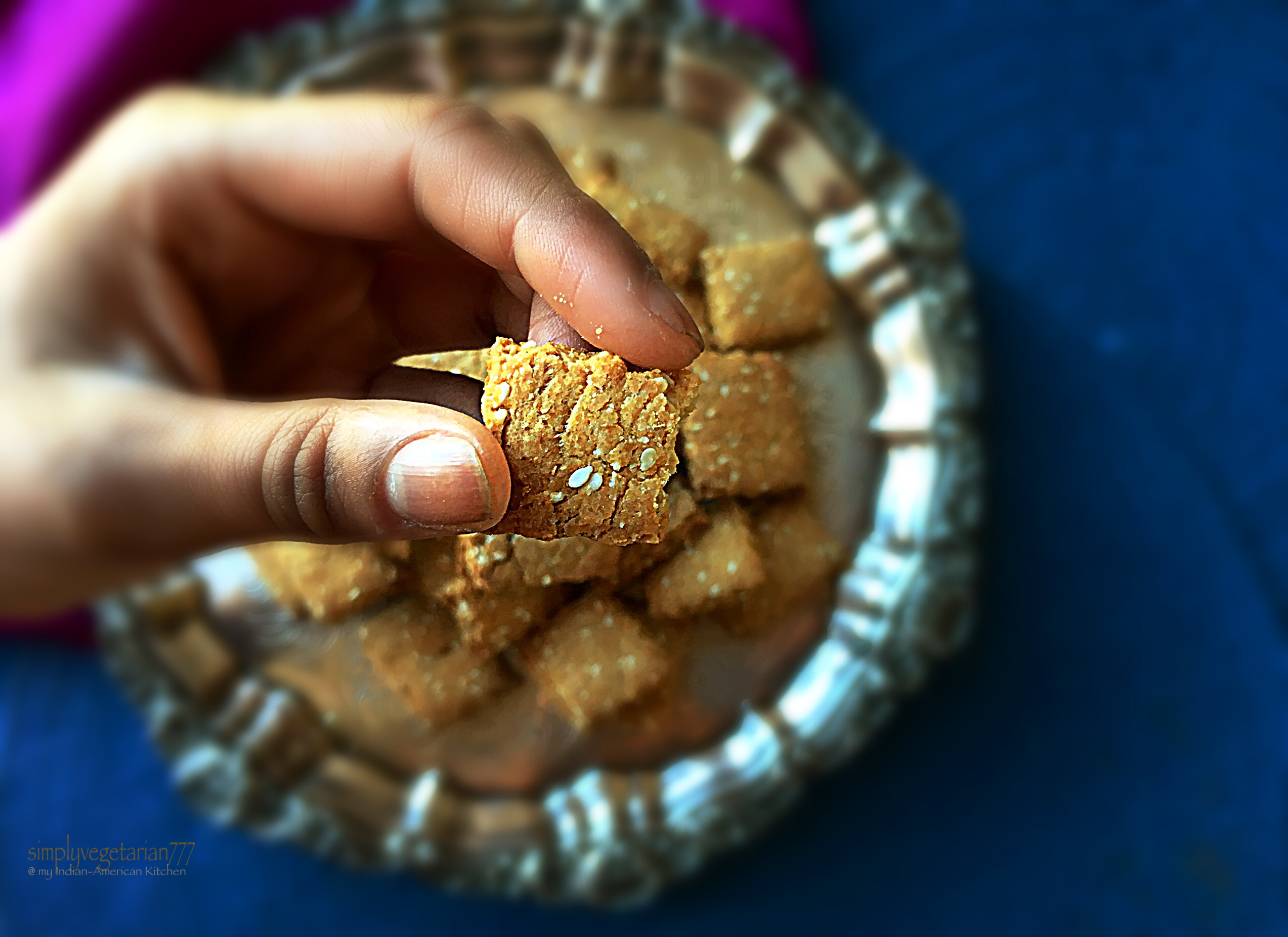
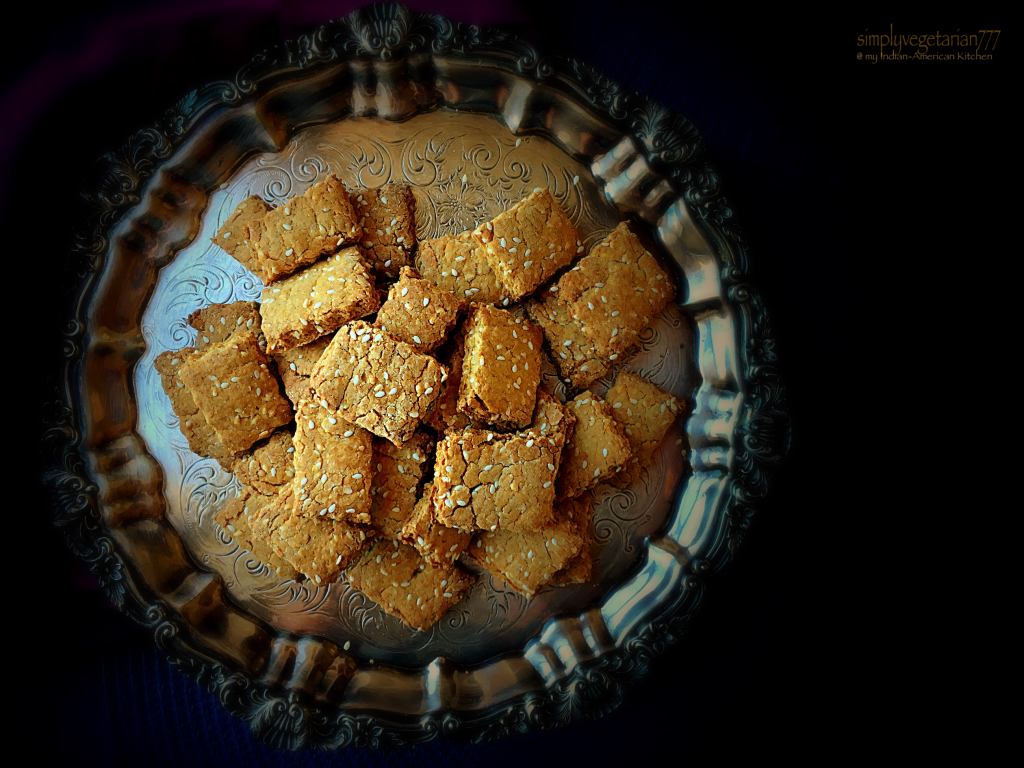
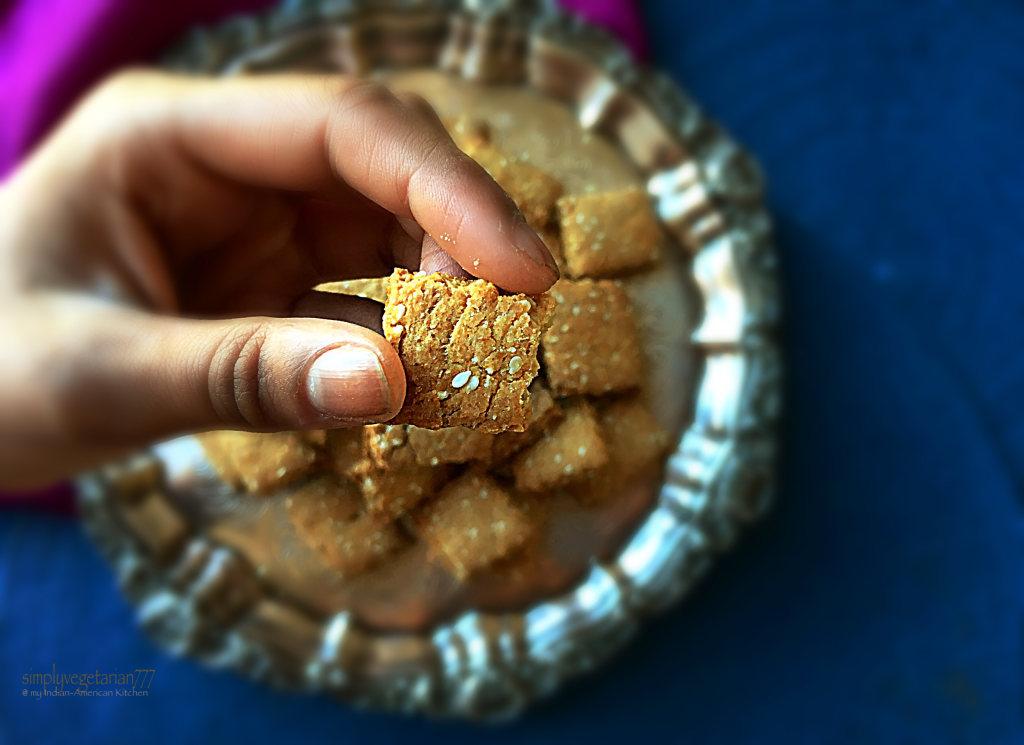
Gudh Til ki Meethi Mathri – Baked is a delicious version which is not deep fried and still very delicious. It is a very common sweet cracker, made often in Indian households during winter time. Gudh and Til both are warm in nature and keeps the cold at bay.
If you are wondering what does the title mean, then Gudh means Jaggery and Gudh in powder form is callled Shakkar. which is the purest form of sugar, made from sugarcane, Til means Sesame seeds, and mathri means deep fried crackers.
The festival of Ugadi is right around the corner and when Jayashree of Evergreen Dishes contacted me to contribute a recipe for Ugadi collection, I agreed with delight.
As per wiki – Ugadi, also pronounced as Yugadi is the new year celebration for the people from Deccan India. The name Yugadi or Ugadi is derived from the Sanskrit words yuga (age) and ādi (beginning). The Telugu, Kannada, Marathi, Kodava and the Konkani diaspora in Karnataka, Andhra Pradesh, Telangana, Maharashtra, Goa, Tamil Nadu and Kerala celebrate the festival with great fanfare; gatherings of the extended family and a sumptuous feast are ‘de rigueur’. The day begins with ritual showers with oil, followed by prayers. While the people of Andhra Pradesh, and Telangana use the term Ugadi and Karnataka use the term Yugadi/Ugadi for this festival, the people of Maharashtra term the same festival, observed on the same day, Gudi Padwa The Marwari of Rajasthan celebrate the same day as their new year day Thapna. The Sindhis, people from Sindh, celebrate the same day as Cheti Chand, which is the beginning of their calendar year. The Manipuris also celebrate their New Year as Sajibu Nongma Panba on the same day. The Hindus of Bali and Indonesia also celebrate their new year on the same day as Nyepi.
It is a season for ripe mangoes spreading its aroma in the air and the fully blossomed neem tree that makes the air healthy. Also, jaggery made with fresh crop of sugarcane adds a renewed flavor to the typical dishes associated with Ugadi. Ugadi pachchadi is one such dish that has become synonymous with Ugadi. It is made of new jaggery, raw mango pieces and neem flowers and new tamarind which truly reflect life – a combination of six different tastes sweet, sour, spice, salt, tanginess and bitter tastes symbolizing happiness, disgust, anger, fear, surprise and sadness.
To learn more about Ugadi, Click here!
I have adapted the recipe from Nisha Madhulika’s recipe.
Some considerable snacks from my blog are – Khasta Achari Mathri, Chivda, Masala Makhana, Kaju Chocolate Barfi and Kaju Masala .
I had a fabulous time baking these in my Indian American Kitchen. I am sure you will love these as much as my family did.
Sonal
Hi Sonal! Love this post. Next time I’m in Barcelona, I’m going to see if I can’t find the ingredients to make this. I ate 2 bags (BIG) of the deep-fried variety on a 16-hour train journey up the western coast of India. Your post made me have a wonderful flashback, and I wish I was snacking on it right now. Pinning for future reference!
Thanks for stopping by AJ :). Nostalgia fills us up with joy and warmth and especially when it is food related 🙂
It does sound wonderful and I wonder if they are a little bit like graham crackers. It is very interesting to me because I would not normally think of fennel in a sweet recipe until now. Just like I never used to think of coriander in anything sweet until I saw it in Swedish tea breads and treats. I think the best thing about blogging about food is that I learn so much from so many!
Happy Ugadi and thank you for hosting FF.
🙂
This sounds like such a good cracker–I like that it has sesame seeds in it!
It is delicious Nancy :).
Thank you !
Looks so delish Sonal happy Ugadi!
To you too dear ❤️
delicious and healthy mathris ..perfect with the cup of tea:)
Thanks Shubha ❤️
Thank you for co-hosting Sonal. I bet these would be lovely with a cup of tea. I’m with you and would not like them too sweet.
Thanks Liz for stopping by
Such a fabulous, delish and healthy treat. Happy Ugadi to you!!
To you too dear ❤️